Synopsis
Think about the last meal you ate. Within two hours part of it had become the electricity that lets you read this sentence, part was packed away for later, and a carefully guarded portion entered your bloodstream as glucose. Right now there is about a teaspoon of it in all your blood.
Too little and the brain falters within minutes. Too much, for too long, and blood vessels, nerves, kidneys and eyes pay for it slowly. Diabetes in all its forms is what happens when the systems holding that teaspoon in balance stop working — and almost every decision that follows, from what goes on the plate to when to take a walk, only makes sense once you can see why a number moved.
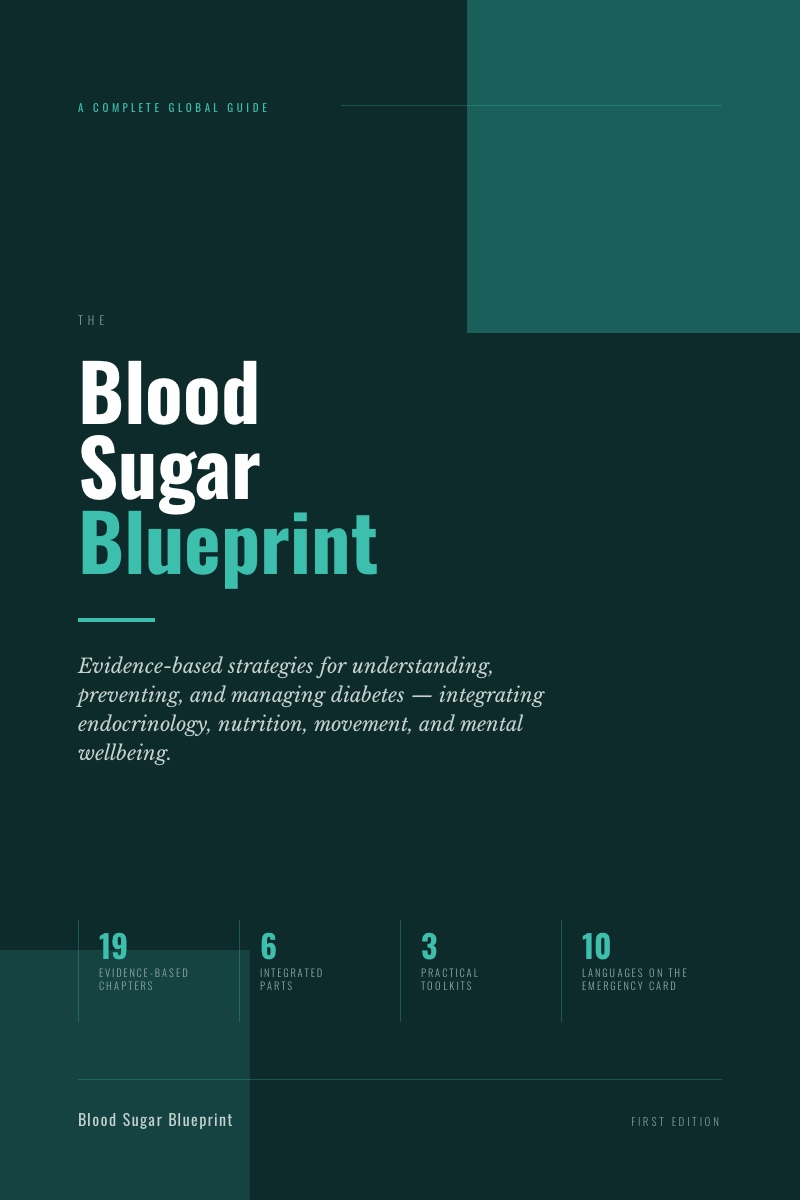
The book follows that logic in six parts: how the machinery works and where it fails, how food actually behaves once glycemic load rather than folklore is the measure, what exercise and sleep do to glucose, how medication and monitoring fit together, how to protect the organs most at risk, and finally the practical toolkits — meal plans built for real cuisines, a printable log, and an emergency card in ten languages.
It is written to be global. The plate method is shown with rice, tortillas, injera, bread and noodles rather than one national diet, and the guidance holds whether you are newly diagnosed, prediabetic, or living with the condition for decades.