Your surgery was successful. Your scans are clear. Your oncologist has used the word "remission." And yet — you have a nagging question that no one has fully answered: if all the cancer is gone, why do I still need to do anything? Why the follow-up appointments, the lifestyle changes, the five-year medications? This chapter answers that question directly, and in doing so, explains the biological foundation for everything else in this book.
- What micrometastasis is — the invisible cells that medical imaging cannot detect
- Why cancer can lie dormant for years, then reactivate
- The four conditions inside the body that allow dormant cancer cells to grow
- How nutrition, sleep, exercise, and stress management directly alter those conditions
- What "surveillance as strategy" means — and how to monitor without living in fear
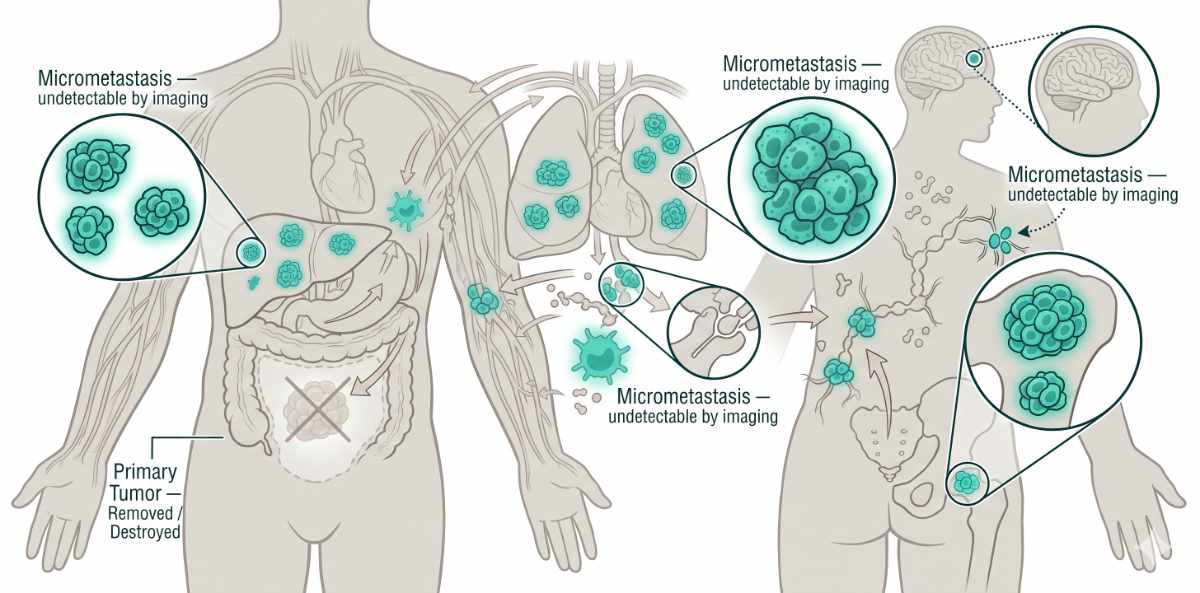
Figure 5.1 · After treatment: what imaging sees vs. what may remain
The Seeds That Remain
In oncology, a primary tumor is not a self-contained mass. Long before it grows large enough to cause symptoms or appear on a scan, a tumor has already been shedding cells — releasing small clusters into the bloodstream and lymphatic system. These shed cells may lodge in distant organs: the liver, the lungs, the bones, the brain. Most will die. Some will enter a state of dormancy. A few, under the right conditions, will eventually grow.
This process is called micrometastasis — the presence of small numbers of cancer cells in organs or tissues distant from the primary tumor, in quantities too small to be detected by conventional imaging.
The primary tumor is like a large tree. Surgery, chemotherapy, and radiation are the axe — they fell the tree. This is essential. But felling the tree does not eliminate every seed it has already scattered.
Micrometastatic cells are those seeds — dispersed before or during treatment, lying in distant soil. Whether they grow depends entirely on the quality of that soil. Rich, fertile, inflamed, sugar-fed soil grows them. Lean, oxygenated, well-tended soil keeps them dormant.
The purpose of every lifestyle intervention in this book is not to destroy what conventional treatment already destroyed. It is to make your body's internal environment — the soil — permanently inhospitable to the seeds that may remain.
This is not a metaphor invented to comfort patients. It is the biological reality of cancer biology as it is currently understood. The field of cancer dormancy research has grown substantially over the past two decades, and its implications for survivorship are profound: what you do with your body after treatment ends has measurable effects on whether micrometastatic cells remain dormant or are triggered to proliferate.
The Limits of "Clear Scans"
When your oncologist tells you your scan is clear, they are telling you something real and important: there is no evidence of disease detectable at current imaging resolution. This is genuinely good news. But it is not the same as saying there are no cancer cells in your body. Understanding this distinction is not meant to generate fear — it is meant to clarify why surveillance and prevention measures matter even when you feel well and your scans are clean.
The gap between "what the scan shows" and "what may exist" is not a reason for despair. It is the reason for the chapters that follow. Every piece of evidence reviewed in this book — on nutrition, exercise, sleep, stress reduction, and targeted supplementation — is evidence that the internal environment shapes what dormant cells do. You may not be able to guarantee those cells do not exist. You can, with high confidence, shape the environment they inhabit.
Cancer Dormancy: The Long Sleep
Cancer dormancy is one of the most studied and least discussed aspects of oncology. It refers to the biological state in which cancer cells exist in the body without proliferating — neither growing nor being eliminated, maintained in a suspended equilibrium by the balance of forces between the cancer cells and the host immune system.
Dormancy can last months, years, or even decades. Some patients treated for early-stage breast cancer experience recurrence fifteen or twenty years after their initial treatment — evidence that dormant cells can remain viable across extraordinary spans of time. What triggers their reactivation is a question that occupies a large portion of current cancer biology research, and the answers point consistently toward the same categories of factors: immune function, metabolic environment, inflammation, and stress.
The Four Conditions Cancer Needs to Grow
Cancer cells do not grow in a vacuum. They require specific conditions in the surrounding tissue — the tumor microenvironment (TME) — to exit dormancy and begin dividing. Four conditions consistently emerge from the research as the most important enabling factors. Critically, all four are substantially within the control of lifestyle choices.
Inflammatory cytokines (IL-6, TNF-α, NF-κB) promote tumor angiogenesis, suppress anti-tumor immunity, and stimulate cancer cell proliferation. Processed foods, obesity, chronic psychological stress, and sleep deprivation are the primary drivers.
Cancer cells preferentially consume glucose via aerobic glycolysis (the Warburg effect), producing energy far less efficiently than normal cells but in a way that doesn't require oxygen. Sustained hyperglycemia and insulin resistance provide a continuous fuel supply.
Paradoxically, poorly oxygenated tissue creates conditions cancer cells exploit. Hypoxia upregulates HIF-1α, promoting angiogenesis and metastatic gene expression. The lactic acid byproduct of glycolysis creates tissue acidosis, which further suppresses immune function.
A compromised immune system — whether from chronic stress, poor sleep, nutritional deficiency, or age — reduces NK cell activity and T-cell surveillance. Cancer cells exploit this window to escape detection and begin proliferating.
What is remarkable about these four conditions is that they are not fixed biological parameters. They are dynamic states that fluctuate in response to what you eat, how you sleep, how you move, how you manage stress, and what you are exposed to. The internal environment is not something that happens to you — it is something you continuously create and modify through daily choices.
Flipping the Environment
The goal of holistic cancer recovery is to systematically reverse each of the four conditions above — to create an internal environment that is actively hostile to cancer cell proliferation. The following chapters address each dimension in detail. The table below provides an orientation to how each condition is modified:
| Condition | What Makes It Worse | What Reverses It | Chapters |
|---|---|---|---|
| Chronic Inflammation | Processed foods, refined sugar, trans fats, obesity, unmanaged stress, poor sleep | Anti-inflammatory diet (omega-3s, polyphenols, fiber), stress regulation, exercise, adequate sleep | Ch. 7–9, 13–14 |
| Elevated Blood Glucose | High glycemic foods, sedentary behavior, insulin resistance, cortisol dysregulation | Low-glycemic diet, resistance exercise, time-restricted eating, intermittent fasting protocols | Ch. 8, 10–11, 20 |
| Hypoxia & Acidosis | Sedentary lifestyle, shallow breathing, obesity, tissue compression from excess fat | Aerobic exercise, diaphragmatic breathing practices, movement, adequate hydration, alkaline-promoting foods | Ch. 10–12, App. A |
| Immune Suppression | Chronic stress, poor sleep, nutritional deficiencies (Vitamin D, zinc, selenium), excess alcohol | Sleep optimization, stress management, immune-supportive nutrition, targeted supplementation | Ch. 4, 13–14, 16 |
No single intervention reverses all four conditions simultaneously. But each intervention you adopt shifts the environment incrementally — and the effects compound. A patient who sleeps well, eats an anti-inflammatory diet, walks daily, and manages chronic stress has addressed all four conditions simultaneously. This is not coincidence. These lifestyle factors are biologically connected.
What You Can and Cannot Control
Honesty requires acknowledging that cancer recurrence is not entirely preventable through lifestyle change. Some recurrences happen to patients who do everything "right." Genetic factors, tumor biology, treatment response, and chance all play roles that are not fully within anyone's control. This chapter is not a guarantee. It is a probability argument.
The evidence is clear that lifestyle factors modify risk. A 2019 meta-analysis in JAMA Oncology found that breast cancer survivors who maintained the highest levels of physical activity had a 40% lower risk of cancer-specific mortality compared to the least active. A 2022 study in Cell Metabolism demonstrated that time-restricted eating reduced circulating insulin-like growth factor (IGF-1) — a key tumor promoter — by 15% in overweight cancer survivors, independent of caloric intake. These are not marginal effects. They are clinically meaningful shifts in recurrence risk.
Surveillance as Strategy, Not Anxiety
A second aspect of preventing undetected micrometastasis from becoming clinical recurrence is early detection — catching any reactivation before it becomes advanced disease. The follow-up schedule your oncologist has given you is not arbitrary. It reflects the known patterns of recurrence for your cancer type — when recurrences are most likely to occur and what signs precede them.
Many patients experience follow-up surveillance as a source of intense anxiety — what oncologists now call Scanxiety, the dread that builds in the days or weeks before scheduled imaging or blood tests. This is a real and recognized phenomenon, and Chapter 4 addressed psychological strategies for managing it. Here, the reframe is a different one: surveillance is not a test of whether you have failed. It is a tool that gives you the best possible chance of catching any recurrence early, when treatment options are broadest and outcomes are best.
There is a difference between scheduled monitoring (attending follow-up appointments, getting blood tests on schedule — useful and important) and constant vigilance (checking your body for symptoms daily, googling every sensation, living in anticipatory dread — harmful and counterproductive). The former is a health behavior. The latter is an anxiety disorder and itself suppresses immune function through chronic cortisol elevation. Aim for the first; treat the second if it arises.
Standard Surveillance Markers by Cancer Type
| Cancer Type | Blood Marker | Imaging | Typical Follow-up Interval |
|---|---|---|---|
| Breast | CA 15-3, CA 27.29 (limited role), CEA | Annual mammogram; CT/bone scan if symptomatic | Every 3–6 months (yr 1–2); annually thereafter |
| Colorectal | CEA (carcinoembryonic antigen) | CT chest/abdomen/pelvis; colonoscopy | Every 3 months (yr 1–2); 6-monthly (yr 3–5) |
| Lung | Limited — imaging primary | CT chest every 3–6 months | Every 3–6 months (yr 1–2) |
| Prostate | PSA (prostate-specific antigen) | Bone scan / MRI if PSA rises | PSA every 3–6 months (yr 1–2); annually (yr 3–5) |
| Ovarian | CA-125 | CT abdomen/pelvis if CA-125 rises | Every 3 months (yr 1–2); 6-monthly thereafter |
Tumor marker blood tests (CA-125, CEA, PSA, CA 15-3) are useful within the context of your personal trend — not as absolute numbers. A single elevated result requires clinical interpretation: false positives are common, and the tests have significant limitations. Always discuss results with your oncologist rather than interpreting them independently. Doing so independently and without context is a reliable source of unnecessary terror.
After completing surgery, adjuvant chemotherapy, and radiotherapy for Stage III colorectal cancer, Susan was told by her oncologist that her scans were clear and her CEA was normal. She asked the question many patients don't know how to ask: "Is there anything I should be doing — not medically, but with my lifestyle — to reduce the chance of it coming back?"
She describes the conversation that followed as "the most useful twenty minutes of my entire treatment." Her oncologist outlined the evidence on physical activity, dietary patterns, and metabolic health in colorectal cancer recurrence. Susan went home, joined a supervised exercise program, reduced processed food and sugar, and began working with a dietitian experienced in oncology nutrition.
Five years later, she remains in remission. She is careful not to attribute this entirely to lifestyle — "I know I might be lucky," she says — but equally careful not to dismiss it. "I am doing everything within my power to keep the environment inhospitable. That's the part of this I can control, and I'm going to control it."
- Micrometastatic cancer cells — shed by the primary tumor before or during treatment — may remain in distant organs at quantities below imaging detection. "Clear scans" mean no detectable disease; they do not mean no cancer cells exist.
- Cancer dormancy is real and can last years or decades. Whether dormant cells reactivate depends on the biological environment they inhabit — the tumor microenvironment (TME).
- Four conditions enable cancer reactivation: chronic inflammation, elevated blood glucose, hypoxia/acidosis, and immune suppression. All four are substantially modifiable through lifestyle.
- The goal of holistic recovery is not to destroy what treatment already destroyed — it is to make the body's internal environment chronically inhospitable to the micrometastatic seeds that may remain.
- Follow-up surveillance is a tool for early detection, not a test of personal failure. Attend all scheduled appointments. Discuss liquid biopsy (ctDNA) options with your oncologist if you want earlier detection capabilities.
- Distinguish scheduled monitoring from anxious constant vigilance. One improves outcomes. The other suppresses the immune function you need.