The gut is not a passive bystander during cancer treatment. It is a frontline battlefield. Chemotherapy drugs, designed to destroy fast-dividing cancer cells, cannot distinguish between a cancer cell and the rapidly renewing cells that line your intestinal wall. The result — damage, inflammation, and a cascade of effects that reach well beyond digestion — is one of the most underaddressed dimensions of oncological care. This chapter gives you the tools to protect your gut, manage side effects, and support treatment completion.
- Why chemotherapy damages the gut lining and what mucositis means for treatment
- How gut damage leads to immune suppression and treatment delays
- Specific foods and nutrients that repair the intestinal lining
- What to eat — and what to avoid — at each phase of a chemotherapy cycle
- Practical meal strategies when nausea, mouth sores, or fatigue make eating difficult
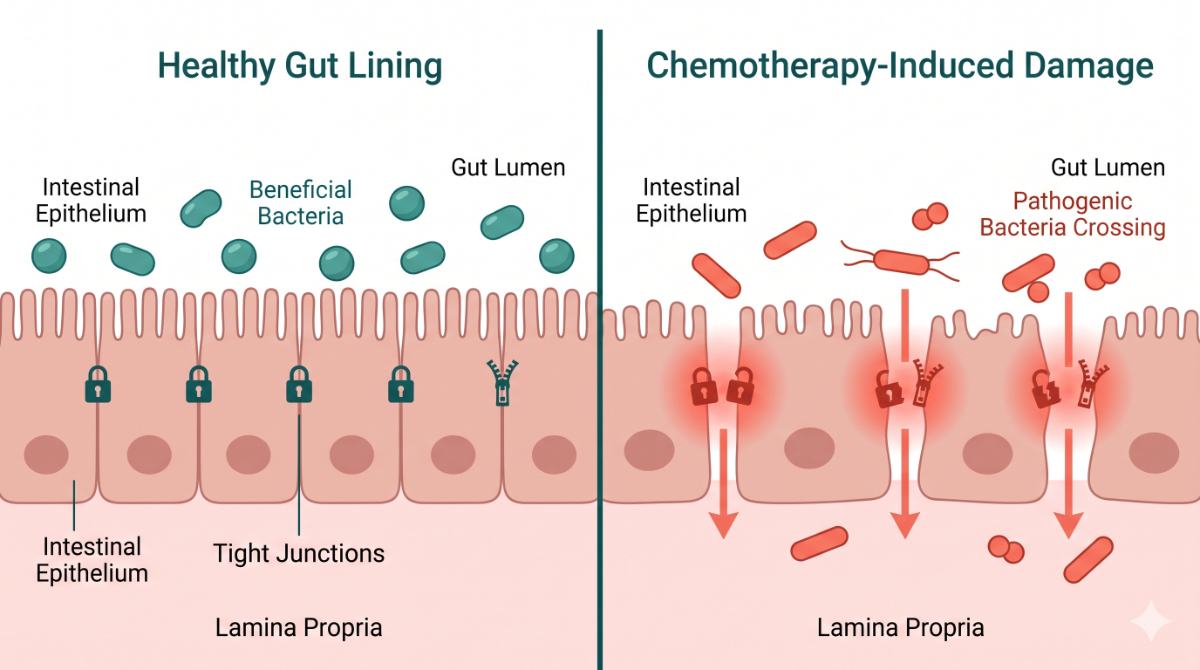
Figure 6.1 · Intact gut lining (left) vs. chemotherapy-induced mucosal damage (right)
How Chemotherapy Damages the Gut
The cells lining the intestinal wall are among the fastest-dividing cells in the human body, replacing themselves every three to five days. This rapid renewal makes them highly sensitive to any agent designed to halt cell division — which is precisely what most chemotherapy drugs do. The result is mucositis: inflammation and ulceration of the mucosal lining, from the mouth to the rectum.
Chemotherapy kills fast-dividing intestinal epithelial cells. The mucosal layer thins, ulcerates, and develops gaps between cells. In the mouth, this manifests as painful sores (oral mucositis); in the intestine, as diarrhea, cramps, and nutrient malabsorption.
Proteins holding intestinal cells together (tight junctions) weaken. The gut becomes permeable, allowing bacteria, endotoxins, and partially digested food particles to enter the bloodstream — triggering systemic inflammation.
Chemotherapy acts as a broad antibiotic, decimating commensal bacteria. Pathogenic organisms (Candida, Clostridioides difficile) proliferate in the resulting ecological vacuum, worsening inflammation and diarrhea.
70–80% of immune cells reside in gut-associated lymphoid tissue (GALT). Gut damage directly impairs immune cell production and function, contributing to the neutropenia that may delay subsequent chemotherapy cycles.
If white blood cell counts drop below the threshold for safe chemotherapy — a direct consequence of gut-immune damage — the next cycle must be delayed. Treatment delays reduce the cumulative dose intensity and can compromise outcomes.
This cascade illustrates why gut protection is not merely a matter of comfort. Maintaining gut integrity during chemotherapy is a clinical strategy: a patient whose gut remains functional absorbs nutrients better, maintains white blood cell counts better, tolerates treatment better, and completes more cycles on schedule.
The Key Repair Nutrients
The gut lining repairs itself rapidly when given the right raw materials. Three nutrients are particularly important during active treatment:
| Nutrient | Role in Gut Repair | Best Sources During Treatment | Note |
|---|---|---|---|
| Glutamine | Primary fuel source for intestinal epithelial cells; accelerates mucosal repair; reduces mucositis severity | Bone broth, chicken, fish, eggs, tofu — or supplemental L-glutamine 5–10 g/day | Evidence supports 5 g twice daily; discuss with oncologist |
| Zinc | Required for epithelial cell synthesis; zinc deficiency worsens mucositis significantly | Pumpkin seeds, oysters, legumes, eggs — ensure diet provides ~15 mg/day | Do not exceed 40 mg/day supplementally |
| Vitamin A | Maintains mucosal integrity; regulates tight junction proteins | Sweet potato, carrot, pumpkin, egg yolk — all cooked and easily digested | Avoid high-dose supplemental retinol during active treatment |
Bone broth deserves particular mention. Slow-cooked bone broth is rich in gelatin, collagen precursors, glutamine, glycine, and proline — precisely the amino acids used to rebuild mucosal tissue. It is also warm, easily tolerated even with severe nausea, and provides hydration. A daily bowl of bone broth during active treatment has strong traditional and emerging scientific support.
What to Eat — and Avoid — During Chemotherapy
When white blood cell counts are lowest (typically days 7–14 after each chemotherapy cycle, the "nadir"), your immune system cannot fight off bacteria that healthy people would easily clear. During this window, all food must be thoroughly cooked — no raw vegetables, no unpasteurized products, no buffet or shared serving foods. Your oncology team will inform you of your nadir dates. Plan your food preparation around them.
Managing the Most Common Side Effects
| Side Effect | Mechanism | Dietary Strategy | When to Call Your Team |
|---|---|---|---|
| Nausea | Serotonin release in gut from chemo; direct effect on chemoreceptor trigger zone | Small frequent meals every 2–3 hours; cold or room-temperature foods (less aromatic); ginger tea; avoid strong smells during cooking | Vomiting >3× per day, unable to keep fluids down for 24 hours |
| Oral Mucositis | Direct mucosal cell death; secondary bacterial infection | Soft, cool, non-acidic foods; aloe vera juice rinse; avoid alcohol mouthwashes; use soft toothbrush | Grade 3+ mucositis (cannot eat/drink); fever with mouth sores |
| Diarrhea | Mucosal damage; dysbiosis; osmotic effect of damaged absorption | BRAT diet (banana, rice, apple sauce, toast); oral rehydration with electrolytes; avoid fiber during acute episodes; probiotics once acute phase resolves | >6 loose stools per day; blood in stool; fever; signs of dehydration |
| Constipation | Opioid pain medication; vinca alkaloids (neurotoxicity); reduced fluid/food intake | Warm water with lemon on waking; prune juice; gentle ambulation; adequate hydration 2–3L/day | No bowel movement >3 days; abdominal distension; pain |
| Loss of Appetite | Nausea, taste changes, emotional stress, fatigue | Nutrient-dense small portions; calorie-dense foods (avocado, nut butter, egg); eat by clock rather than hunger cues; cold foods if hot food triggers nausea | >10% weight loss in one month; BMI falling below 18.5 |
Chemotherapy commonly causes metallic taste, food aversions, or a complete loss of taste discrimination. This is not psychological. It is a direct neurological side effect. Use plastic utensils if metallic taste is a problem; marinate proteins in citrus or herbs to enhance flavor; experiment with cold foods, which have less aroma. Taste function typically returns 3–6 weeks after treatment ends.
The Chemo Cycle: What to Eat When
Chemotherapy side effects are not constant — they follow a predictable pattern within each cycle. Understanding this rhythm allows you to plan eating strategy around it rather than reacting to crisis.
| Days After Infusion | Typical State | Eating Strategy |
|---|---|---|
| Day 0–1 | Infusion day; moderate nausea begins | Eat a light meal 2 hours before infusion. Bring crackers and ginger tea. Avoid favorite foods (aversion conditioning is real). |
| Days 2–4 | Peak nausea; fatigue; possible diarrhea | Small volumes every 2–3 hours. Bone broth, congee, banana. Do not force large meals. Hydration is the priority. |
| Days 5–7 | Nadir approaching; immune suppression begins | Continue gut-soothing foods. All food must be fully cooked and freshly prepared. No shared meals or restaurant food. |
| Days 8–14 | Nadir (white cells at lowest) | Maximum food safety precautions. Nutrient-dense soft foods. Glutamine and zinc supplementation optimal here. |
| Days 15–21 | Recovery; appetite returns; white cells rising | Gradually reintroduce variety. Begin adding cooked vegetables, lean protein, complex carbohydrates. Rebuild nutritional reserves before the next cycle. |
After her first cycle, Mei could not eat for four days. She lost 3 kg in two weeks, and her second cycle was delayed by a week because her neutrophil count was too low. Her oncology nurse referred her to a dietitian, who introduced her to the cycle-based eating approach and bone broth.
From cycle two onward, Mei prepared a large batch of chicken bone broth before each infusion day. She sipped it throughout the nausea phase and transitioned to solid food when her appetite returned. All six subsequent cycles were completed on schedule. She finished treatment without further delays and with minimal weight loss. "Nobody told me eating had a strategy," she said. "Once I understood the pattern, I stopped dreading it."
- Chemotherapy damages the gut lining (mucositis), causing leaky gut, dysbiosis, and immune suppression. These effects are linked directly to treatment delays.
- Glutamine, zinc, and Vitamin A are the key gut-repair nutrients. Bone broth is the most practical and well-tolerated source during active treatment.
- All food must be fully cooked during neutropenic phases (typically days 7–14 after each cycle). No raw vegetables, raw fish, or unpasteurized products.
- Chemotherapy side effects follow a predictable cycle. Eating strategy — not just eating — makes a measurable difference in tolerance and treatment completion.
- Taste changes are neurological, not psychological. They are temporary and should not be interpreted as permanent changes in food preference.