For decades, cancer patients were told to rest. It seemed intuitive: you are fighting a serious illness, undergoing toxic treatments, often exhausted — why would movement be appropriate? We now know the answer to that question matters enormously. The evidence accumulated over the past fifteen years has transformed how oncology researchers and clinicians think about exercise during treatment — and the answer is not rest.
- Why total bed rest during chemotherapy is now considered harmful, not protective
- The biological mechanisms through which exercise improves treatment outcomes
- Which types of exercise are safe, beneficial, and practical during active treatment
- How to match exercise intensity to your energy level across the chemotherapy cycle
- When to stop and when to push through — the real signals to monitor
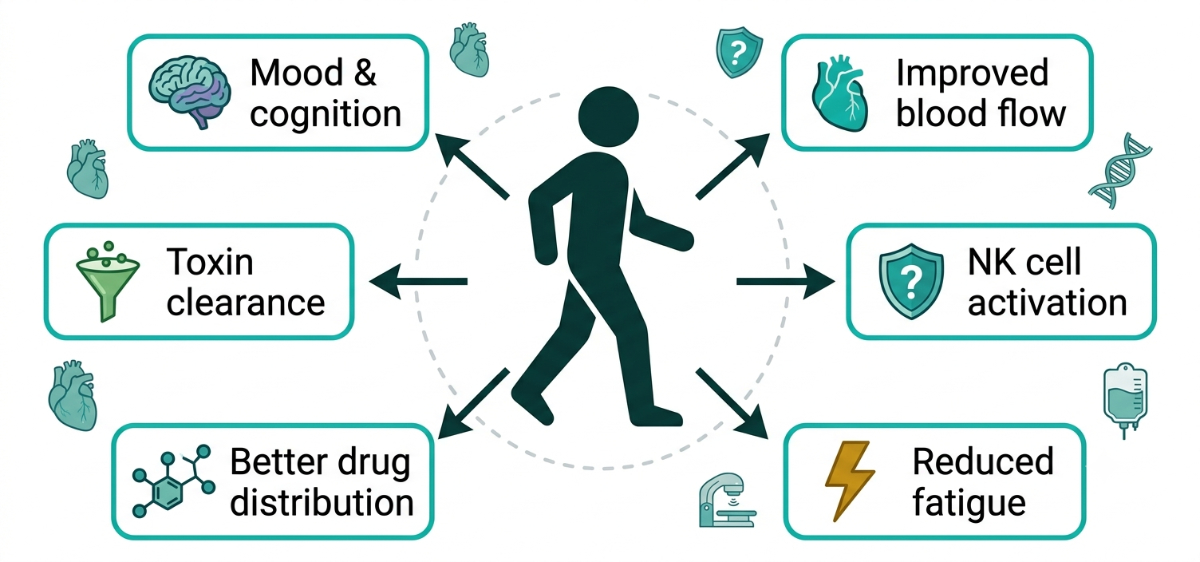
Figure 7.1 · The documented biological effects of exercise during chemotherapy
Dismantling the Bed Rest Myth
"You are fighting a serious illness. Rest is the priority. Conserve all energy for treatment. Exercise is for when you've recovered."
Prolonged inactivity accelerates cancer-related fatigue, causes muscle loss (sarcopenia), impairs circulation, and reduces treatment tolerability. Light exercise is therapeutic.
A landmark 2012 Cochrane review of 56 randomized controlled trials found that exercise during and after cancer treatment significantly reduced cancer-related fatigue, the most common and distressing symptom of treatment. A 2019 meta-analysis in JAMA Oncology involving 34,000 cancer patients demonstrated that physically active patients had a 37% lower risk of cancer-specific mortality compared to inactive patients — effects that were maintained across cancer types and stages.
The mechanism underlying these findings is not mysterious. Cancer-related fatigue (CRF) is not simply tiredness — it is a neurobiological state driven by inflammatory cytokines, disrupted cortisol rhythms, anemia, and deconditioning. Of these four drivers, exercise directly addresses three. It reduces inflammatory cytokines, resets cortisol rhythms through its effect on the HPA axis, and reverses deconditioning by maintaining muscle mass and cardiovascular capacity.
How Exercise Directly Supports Treatment
| Mechanism | How Exercise Helps | Clinical Evidence |
|---|---|---|
| Drug Distribution | Improved circulation delivers chemotherapy more evenly to tumor tissue (including hypoxic regions that resist treatment) | Jones et al., 2011 — aerobic exercise increased tumor perfusion in breast cancer patients during taxane chemotherapy |
| Toxin Clearance | Enhanced liver and kidney perfusion accelerates metabolite clearance between cycles, reducing cumulative toxicity | Supported by pharmacokinetic studies in exercise oncology literature |
| Immune Function | Exercise transiently mobilizes NK cells, CD8+ T-cells, and neutrophils; regular moderate exercise supports sustained immune capacity | Pedersen et al., Cell, 2016 — exercise reduced tumor growth through NK cell mobilization in murine models |
| Muscle Preservation | Resistance exercise maintains muscle mass against the catabolic effects of chemotherapy and inactivity | Sarcopenia is an independent predictor of poor chemotherapy tolerance and outcomes |
| Psychological Resilience | Exercise is the most evidence-supported non-pharmacological intervention for depression and anxiety | Mishra et al., Cochrane Review, 2012 — significant improvement in anxiety and depression across 40 RCTs |
Safe Exercise During Active Treatment
The key principle is gentle, consistent, adapted movement — not performance. You are not training for an athletic event. You are maintaining biological function against the inertia of illness and treatment.
The most universally accessible exercise. Even 10-minute walks, 2–3 times per day, maintain cardiovascular function and reduce fatigue. Walk at a pace where you can hold a conversation.
Maintains joint mobility and tissue elasticity. Particularly important post-surgery to prevent scar tissue restriction. 10–15 minutes daily; never stretch to pain.
Chair squats, wall push-ups, seated leg raises. Preserves muscle mass with minimal cardiovascular demand. Begin 3–4 days after infusion, when nausea is resolving.
Water reduces joint load while providing resistance. Excellent for patients with bone metastases (confirm suitability with oncologist). Avoid if central line is in place.
Diaphragmatic breathing maintains respiratory capacity and activates the parasympathetic nervous system. 5–10 minutes daily; practice lying down or in a chair.
Restorative yoga — supported poses held for 1–5 minutes — is well-studied in oncology and reduces fatigue, anxiety, and sleep disturbance. Avoid inversions; avoid heated rooms.
Chest pain, palpitations, or dizziness during activity; fever above 38°C (100.4°F) — do not exercise during febrile neutropenia; unusual pain in bones or joints (possible metastatic involvement — require imaging before continuing); platelet count below 50,000/µL — avoid contact or resistance exercise; severe anemia (hemoglobin below 8 g/dL) — walking only, no exertion. Your oncologist or physiotherapist can advise on specific thresholds for your situation.
Matching Exercise to Your Energy Across the Cycle
Your energy is not constant during a chemotherapy cycle. It follows a predictable curve, and matching your exercise to that curve avoids the twin mistakes of pushing too hard on bad days and doing nothing on good ones.
| Cycle Day | Typical Energy Level | Recommended Activity |
|---|---|---|
| Day 0 (Infusion) | Moderate; pre-infusion best | Light walk in the morning before infusion. Rest afterward. |
| Days 1–3 | Low — nausea peak | Gentle breathing exercises from bed or chair. Short 5-minute walks if tolerated. Prioritize hydration. |
| Days 4–7 | Variable — beginning to lift | Increase to 10–15 minute walks as energy allows. Begin gentle stretching. Listen to body closely. |
| Days 8–14 | Moderate — nadir (immune low) | Continue walking but avoid gyms, pools, or group settings (infection risk). Outdoor walking in low-crowd areas acceptable. |
| Days 15–21 | Best energy of cycle | Use this window actively. 20–30 minute walks, light resistance work. This is the period to rebuild strength before the next cycle. |
Daily Energy and Movement Log
Track this weekly and bring it to consultations — it helps your team identify patterns and adjust recommendations.
| Day After Chemo | Energy (1–10) | Activity Done | Duration | How I Felt After |
|---|---|---|---|---|
| Day 4 | 5/10 | Short walk on porch | 10 min | Back pain eased, warmer |
On very low-energy days, commit to only two minutes of movement — stand up, take ten slow steps, sit back down. This is not a compromise; it is the evidence-based strategy for maintaining movement momentum against fatigue. Most patients find that two minutes becomes five or ten once started. But even if it does not, two minutes daily is biologically superior to zero.
Ahmad worked as a building contractor and was accustomed to being physically active. After his first cycle, he did nothing for two weeks — "I thought resting was the right thing." He arrived at cycle two feeling weaker than he had before treatment began. His physiotherapist introduced him to the energy-matching approach.
From cycle two onward, Ahmad walked for 15 minutes on the days he had energy and did stretching on the days he did not. He kept a simple log on his phone. By cycle four, he noticed his "good window" (days 15–21) was extending. He finished treatment having lost only 2 kg of muscle mass — his physiotherapist called this "remarkable" for six cycles of R-CHOP. "I thought exercise was for people who weren't sick," he said. "I had it completely backwards."
- Total bed rest during chemotherapy worsens cancer-related fatigue, accelerates muscle loss, and impairs treatment tolerability. Gentle, consistent movement is the evidence-based approach.
- Exercise improves drug distribution, toxin clearance, immune cell mobilization, and psychological resilience — all directly relevant to treatment outcomes.
- Safe exercise during treatment: walking, gentle stretching, bodyweight resistance, restorative yoga, and breathing exercises. Adjust to your energy level — not to a fixed schedule.
- Match exercise to your cycle: very light on days 1–3, increasing through days 4–14, most active during days 15–21 (your recovery window).
- Stop and contact your team for chest pain, fever above 38°C, unusual bone pain, or known severe anemia. These are hard boundaries, not suggestions.