An estimated 40–80% of cancer patients use herbal remedies or dietary supplements during treatment — most without informing their oncologist. This is one of the most consequential forms of non-disclosure in oncological care. Some herbs are safe, even beneficial. Others actively interfere with how chemotherapy drugs are metabolized, potentially rendering treatment ineffective. This chapter gives you the pharmacological framework to navigate this terrain safely — and the tool to have an informed conversation with your oncologist.
- Why antioxidant supplementation during chemotherapy is more complex than it appears
- Five herbs with clinical evidence of safety and benefit during active treatment
- Ten herbs and supplements that should be avoided during chemotherapy — and why
- The pharmacological mechanism by which St. John's Wort can make chemotherapy fail
- How to prepare a supplement disclosure list for your oncologist
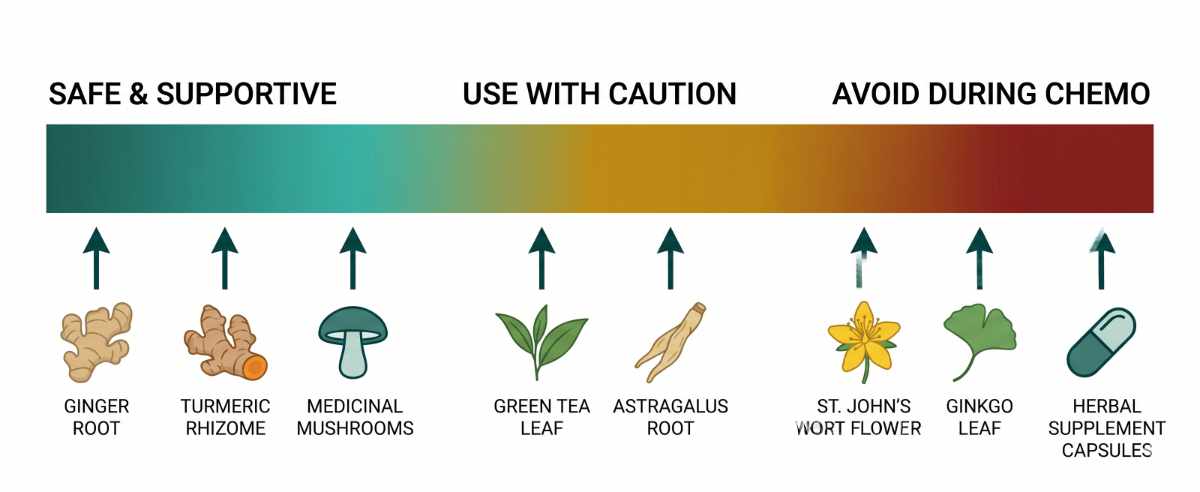
Figure 8.1 · The safety spectrum — herbs during active chemotherapy
The Golden Rule: Timing and Form Matter
The most important principle in herb-drug interaction during cancer treatment is this: the same compound can be safe in food and dangerous in supplement form. Turmeric in your curry is fundamentally different from a 1,000 mg curcumin capsule taken alongside doxorubicin. The issue is dose and context — specifically, whether the antioxidant or modulatory effect of the compound is significant enough to interfere with the oxidative mechanism through which many chemotherapy drugs kill cancer cells.
Many cancer patients reason that antioxidants are protective — which is true in healthy tissue and for long-term cancer prevention. But several chemotherapy drugs (anthracyclines like doxorubicin, platinum agents like cisplatin, bleomycin) work by generating reactive oxygen species (free radicals) that damage cancer cell DNA. High-dose antioxidant supplementation can neutralize these free radicals, potentially reducing chemotherapy efficacy. This is not a reason to avoid antioxidant-rich foods — dietary amounts are too low to matter. It is a reason to avoid high-dose antioxidant supplements (megadose Vitamin C, Vitamin E, CoQ10 in large doses) during active cytotoxic treatment.
Herbs with Evidence of Safety During Active Treatment
Gingerol, shogaol, paradol — 5-HT3 receptor antagonists (same target as ondansetron, without the constipation side effect)
Rochester Cancer Center RCT (2012): 0.5–1g ginger supplement reduced acute chemotherapy nausea by 40% vs. placebo in 576 patients. Cochrane Review 2014 supports efficacy for acute chemo-induced nausea.
Equivalent to 0.5–1 g daily (from food/tea). As food: 2–3 cm fresh ginger in tea, 30 min before infusion and 24 hours after.
Avoid >4 g/day — antiplatelet effect. Avoid high-dose capsules (≥2 g/day) if surgery within 2 weeks or if taking anticoagulants (warfarin, heparin).
Turmeric as a cooking spice (50–200 mg curcumin per serving) is safe during active treatment. High-dose curcumin supplements (≥500 mg) require oncologist approval — some chemo regimens may be affected.
½ tsp turmeric in cooked dishes daily. Always combine with black pepper (piperine increases absorption 2,000×) and a small amount of fat (curcumin is fat-soluble).
Avoid high-dose curcumin supplements alongside oxidative chemotherapy agents (cisplatin, doxorubicin) without oncologist approval. Avoid with gallstones (stimulates gallbladder contraction).
Hepatoprotective — protects liver cells from oxidative damage during drug metabolism. Important since all chemotherapy drugs are filtered through the liver.
Indonesian Journal of Pharmacy studies show temulawak extract reduced cisplatin-induced SGOT/SGPT elevation by ~45% in animal models. Traditional use widely supported in Indonesian integrative oncology.
1–2 rhizomes boiled in water, drunk as tea morning and evening. Avoid concentrated extracts or capsule form without supervision.
Avoid during pregnancy (uterotonic). Monitor liver enzymes if used alongside other hepatotoxic medications.
Acetogenins in soursop show cytotoxic effects on cancer cells in vitro (laboratory cell cultures). This is real, peer-reviewed science.
In vitro effects do not translate to clinical cancer treatment. No Phase II clinical trial has demonstrated soursop cures or treats cancer in humans. The widely-shared claim that soursop is "10,000× stronger than chemo" has no basis in any peer-reviewed literature.
High-dose soursop leaf extract is associated with atypical parkinsonism (neurological damage) with long-term use due to acetogenin neurotoxicity.
Soursop fruit as food: safe and nutritious. Occasional soursop leaf tea (1–2 cups/week): considered moderate risk. High-dose concentrated extracts/capsules: avoid.
Andrographolide — immunomodulatory, anti-inflammatory, interferon-stimulating
Patients on conventional chemotherapy (not immunotherapy) as general immune support. Traditional bitter tea (1 cup/day) is the typical dosing.
Do not use alongside immunotherapy (checkpoint inhibitors: pembrolizumab, nivolumab, atezolizumab). Andrographolide's immunostimulatory effects may potentiate immune-related adverse events (irAEs), which can be life-threatening. Confirm with your oncologist before any use.
What to Avoid During Chemotherapy
| Herb / Supplement | Why to Avoid | Mechanism |
|---|---|---|
| St. John's Wort (Hypericum) | Induces CYP3A4 enzyme in liver — accelerates metabolism and elimination of many chemo drugs. Plasma drug levels drop dramatically → treatment becomes ineffective. | Enzyme induction |
| Mega-dose Vitamin C (>1 g/day supplement) | Powerful antioxidant neutralizes oxidative stress that cytotoxic chemo (anthracyclines, platinum) uses to kill cancer cells | Antioxidant interference |
| Vitamin E >400 IU/day | Same mechanism as high-dose Vitamin C — antioxidant attenuation of oxidative chemo mechanisms | Antioxidant interference |
| High-dose Garlic extract (capsules) | Antiplatelet effect (worsens bleeding risk when platelets already low from chemo); CYP enzyme inducer | Anticoagulant + enzyme induction |
| Ginkgo biloba | Potent antiplatelet — bleeding risk during thrombocytopenic nadir | Anticoagulant |
| Echinacea | Non-specific immunostimulator — contraindicated with immunotherapy; may worsen autoimmune conditions | Immune overstimulation |
| Kava Kava | Hepatotoxic — multiplies toxic burden on liver already processing chemo metabolites | Hepatotoxicity |
| Comfrey (Symphytum) | Contains pyrrolizidine alkaloids — highly hepatotoxic even without chemotherapy | Direct hepatotoxicity |
| Iron supplements (non-prescription) | Free iron catalyzes reactive oxygen species that damage healthy cells; only take if prescribed based on lab results | Pro-oxidant |
| CoQ10 >300 mg/day | Antioxidant; potential interference with anthracycline chemotherapy mechanism | Antioxidant interference |
Your Supplement Disclosure Form
Bring this to every oncology appointment. Your team needs to know everything you are taking — prescription, over-the-counter, herbal, and traditional. Non-disclosure is common, often because patients fear judgment. A good oncologist is not there to judge your choices — they are there to help you make safe ones.
| Supplement / Herb Name | Dose / Form | Reason You Take It | Oncologist Decision | Notes |
|---|---|---|---|---|
Safe Pause Stop | ||||
Safe Pause Stop | ||||
Safe Pause Stop | ||||
Safe Pause Stop | ||||
Safe Pause Stop |
Patients routinely disclose pharmaceutical medications but omit herbal teas, traditional remedies, vitamins, and products bought at health food stores. These are pharmacologically active substances with real interactions. Bring every bottle, packet, and powder to your next appointment. If you cannot bring the physical products, photograph the labels. Completeness matters more than your doctor's approval of your choices.
- 40–80% of cancer patients use herbal supplements during treatment, most without disclosure. Non-disclosure is one of the most consequential communication failures in oncological care.
- Antioxidants in food amounts are safe. High-dose antioxidant supplements (megadose Vitamin C, E, CoQ10) may reduce chemotherapy efficacy by neutralizing the oxidative mechanism many drugs use.
- Safe during treatment (as food or moderate tea): ginger, dietary turmeric, temulawak, soursop fruit. Sambiloto is safe with conventional chemo but contraindicated with immunotherapy.
- St. John's Wort is the most dangerous supplement interaction in oncology — it induces CYP3A4 and can reduce chemotherapy blood levels to sub-therapeutic concentrations.
- Complete the supplement disclosure form and bring it to every oncology appointment. Disclose everything — including herbal teas, vitamins, and traditional remedies.