In 2022, two landmark papers in Science — from Routy et al. and Matson et al. — demonstrated something that overturned decades of oncological thinking: the composition of a patient's gut microbiome directly predicted whether they would respond to immunotherapy. Patients with high levels of Akkermansia muciniphila in the gut responded dramatically better to anti-PD-1 treatment. Those without it largely did not respond. Your gut microbiome, it turned out, is not just a digestive organ. It is the training ground of your immune system — and one of the most powerful levers you have for long-term cancer prevention.
- The Gut-Immune-Cancer axis — why your microbiome determines your anti-cancer immune response
- How chemotherapy damages the microbiome and what the consequences are
- Specific probiotic strains with clinical evidence for cancer patients — and what each does
- How to grow Akkermansia muciniphila — the bacterium most linked to immune function and immunotherapy response
- A phased restoration protocol from the first week post-treatment to long-term optimization
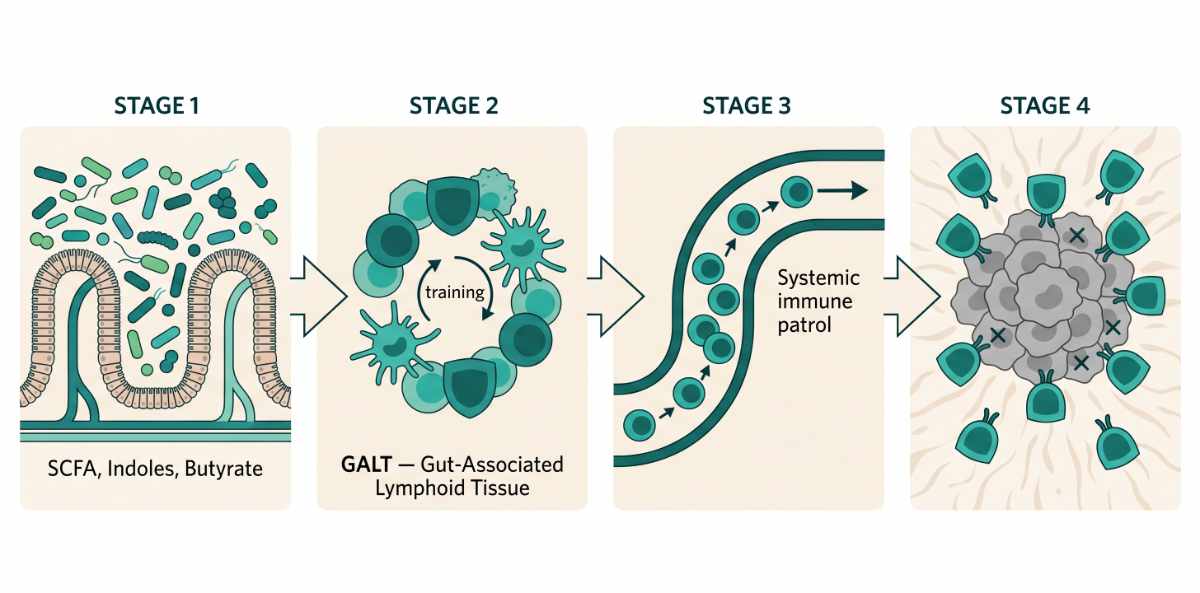
Figure 10.1 · The Gut-Immune-Cancer axis: how microbiome composition shapes anti-tumor immunity
The Gut-Immune-Cancer Axis
The intestinal tract contains more immune cells than any other organ in the body. The gut-associated lymphoid tissue (GALT) houses 70–80% of the body's immune cells, including the NK cells, CD8+ T cells, and regulatory T cells that are central to anti-cancer surveillance. The bacteria that inhabit this environment are not passive residents — they actively train, calibrate, and direct immune function.
Short-Chain Fatty Acids (SCFAs): Bacteria ferment dietary fiber into butyrate, propionate, and acetate. Butyrate directly induces apoptosis in colorectal cancer cells, strengthens tight junctions in the gut wall, and calibrates regulatory T cells to prevent autoimmunity.
Tryptophan Metabolism: Gut bacteria control whether tryptophan is metabolized into indoles (immune-supportive) or kynurenine (immune-suppressive). Excess kynurenine is strongly associated with immune evasion by tumor cells.
The Estrobolome: For hormone-sensitive cancers (ER+ breast, endometrial, prostate), specific gut bacteria express β-glucuronidase, which reactivates conjugated estrogens. Microbiome composition therefore directly influences circulating estrogen burden.
Immunotherapy Response: Routy et al. (Science, 2018) demonstrated that Akkermansia muciniphila abundance in the gut predicts anti-PD-1 immunotherapy response. Patients who took antibiotics before immunotherapy — destroying their microbiome — had significantly worse outcomes. The gut is now considered a co-therapeutic organ in cancer immunology.
What Chemotherapy Does to the Microbiome
| Chemotherapy Effect | Microbiome Impact | Clinical Consequence |
|---|---|---|
| Kills fast-dividing cells | Intestinal epithelial cells die → mucosal lining thins → gut environment destabilizes | Dysbiosis — pathogenic bacteria proliferate in ecological vacuum |
| Antibiotic-like effect | Many chemotherapy agents have direct antibacterial properties; combine with prophylactic antibiotics → drastic reduction in commensal bacteria | Loss of Akkermansia, Bifidobacterium, Lactobacillus — the most clinically important strains |
| Nausea / appetite loss | Reduced food intake → dietary fiber deprivation → bacteria lose their primary substrate | SCFA production drops → butyrate deficiency → loss of mucosal protection and immune calibration |
| Stress response | Psychological and physiological stress increases cortisol → alters gut motility and bacterial population balance | Further gut permeability; dysbiosis worsened by neurological stress pathway |
Probiotic Strains with Clinical Evidence
Not all probiotics are equal. The evidence for specific strains is distinct and non-interchangeable. Here are the most clinically relevant strains for cancer patients, organized by their primary benefit.
Lactobacillus Species
| Strain | Key Benefit for Cancer Patients | Dose | Best Food Source |
|---|---|---|---|
| L. rhamnosus GG | Reduces chemo-associated diarrhea; repairs tight junctions; reduces mucositis severity | 10–20 billion CFU/day | Labeled yogurt/kefir |
| L. acidophilus NCFM | Reduces diarrhea during chemotherapy; improves calcium absorption | 10 billion CFU/day | Plain yogurt |
| L. plantarum | Anti-inflammatory; reduces gut permeability; abundant in traditional fermented vegetables | 10–20 billion CFU/day | Kimchi, sauerkraut, traditional pickles |
| L. casei Shirota | Japanese clinical studies: increases NK cell activity in colorectal cancer patients | 8 billion CFU/day | Yakult (specific strain) |
Bifidobacterium Species
| Strain | Key Benefit | Dose | Available In |
|---|---|---|---|
| B. longum | High SCFA production; regulates Th1/Th2 immune balance; reduces intestinal inflammation | 5–10 billion CFU/day | Many yogurt brands |
| B. lactis Bb-12 | Stimulates macrophage phagocytic activity; controlled studies in cancer patients | 10 billion CFU/day | Activia® (Danone) |
| B. infantis 35624 | Activates regulatory T cells; strong evidence for gut inflammation reduction | 10 billion CFU/day | Align® supplement |
The Special Case: Saccharomyces boulardii
Saccharomyces boulardii CNCM I-745 is a yeast, not a bacterium — and this distinction is critical. Because it is a yeast, it is not killed by antibiotics. This makes it uniquely valuable during periods when prophylactic antibiotics are used alongside chemotherapy. It prevents Clostridioides difficile overgrowth, reduces antibiotic-associated diarrhea, and begins restoring the ecological environment in which bacterial probiotics can then re-establish themselves. Start this before any antibiotic course and continue for two weeks after antibiotics end.
Growing Akkermansia: The Key Bacterium
Akkermansia muciniphila lives in the mucus layer of the colon and is now considered one of the most clinically significant members of the human microbiome. High Akkermansia abundance correlates with lower body weight, lower inflammation, stronger gut barrier integrity, and — most significantly for cancer patients — better immunotherapy response.
Akkermansia is not yet available as a standard probiotic supplement (it is an obligate anaerobe, extremely difficult to manufacture commercially in viable form). The only way to increase it is through diet and lifestyle:
Prebiotic Foods: Feeding Your Bacteria
Probiotics introduce bacteria. Prebiotics feed the bacteria that are already there — and both are necessary. Without adequate prebiotic fiber, even well-colonized beneficial bacteria cannot produce the SCFAs that drive immune benefit.
| Prebiotic Type | Best Food Sources | Primary Bacteria It Feeds | SCFA Produced |
|---|---|---|---|
| Inulin / FOS | Garlic, onion, shallot, half-ripe banana, asparagus, chicory root | Bifidobacterium, Lactobacillus | Butyrate, propionate |
| Resistant Starch | Cooled cooked rice (overnight), cooled potato, green banana | Bacteroidetes, Ruminococcus | Butyrate (highest yield) |
| Beta-Glucan | Oats, barley, shiitake and maitake mushrooms | Bifidobacterium, Lactobacillus | Acetate, propionate |
| Pectin | Apple (with skin), guava, citrus (white pith), carrot | Akkermansia, Bifidobacterium | Butyrate |
| Arabinogalactan | Carrot, beet, tomato, leek | Lactobacillus | Propionate, butyrate |
The Microbiome Restoration Protocol
Traditional Indonesian fermented foods — tempe, yogurt plain, acar (without vinegar), tapai — contain live bacterial cultures that support microbiome diversity. Tempe fresh from fermentation contains Rhizopus oligosporus and its enzymatic by-products. Plain yogurt contains L. bulgaricus and S. thermophilus. These are not supplements — they are real foods with real microbiological activity. Eating one serving of a fermented food daily is the most consistent, sustainable approach to microbiome maintenance.
Weekly Gut Health Self-Assessment
| Parameter | Week 2 | Week 4 | Month 2 | Month 3 |
|---|---|---|---|---|
| Bowel frequency (per day) | ||||
| Consistency (Bristol 1–7; target 3–4) | ||||
| Bloating after meals (1–10) | ||||
| Appetite score (1–10) | ||||
| Energy level (1–10) | ||||
| Fermented food servings today | ||||
| Estimated fiber intake (g) |
After her fourth cycle of chemotherapy, Ratna developed severe C. difficile infection — a consequence of the prophylactic antibiotics she had been given to prevent neutropenic sepsis. She spent eleven days in hospital, and her final two chemotherapy cycles were delayed by three weeks.
During her recovery, her gastroenterologist introduced her to microbiome restoration. She began with S. boulardii — specifically because it could not be killed by antibiotics — while still on treatment for C. difficile. Over four months, she rebuilt her microbiome through graduated dietary changes, plain yogurt daily, and a systematic shift toward a high-fiber diet.
Two years post-treatment, Ratna's CA-125 remains undetectable. Her gastroenterologist notes that her gut function tests are "better than most people her age who have never had cancer." She attributes this, accurately, to the structured restoration protocol. "I treat my gut like an organ that needs rehabilitation," she says. "Because it is."
- The gut microbiome is not just a digestive organ — it is the training ground of anti-cancer immunity. Its composition directly predicts immunotherapy response (Akkermansia muciniphila being the most critical marker).
- Chemotherapy devastates the microbiome through direct antibacterial effects, mucosal damage, prophylactic antibiotics, and dietary changes. Restoration is not automatic — it requires deliberate action.
- Probiotic strains are not interchangeable. Use S. boulardii during antibiotic courses; L. rhamnosus GG and LGG during early post-treatment recovery; multi-strain supplements in Phase 2 and beyond.
- Akkermansia cannot be supplemented — it must be cultivated through polyphenol-rich foods, intermittent fasting, adequate Vitamin D, and strict avoidance of artificial sweeteners.
- Follow the three-phase restoration protocol: Stabilization (weeks 1–4) → Diversification (months 2–3) → Long-term optimization (month 4+). One fermented food daily is the minimum sustainable commitment.